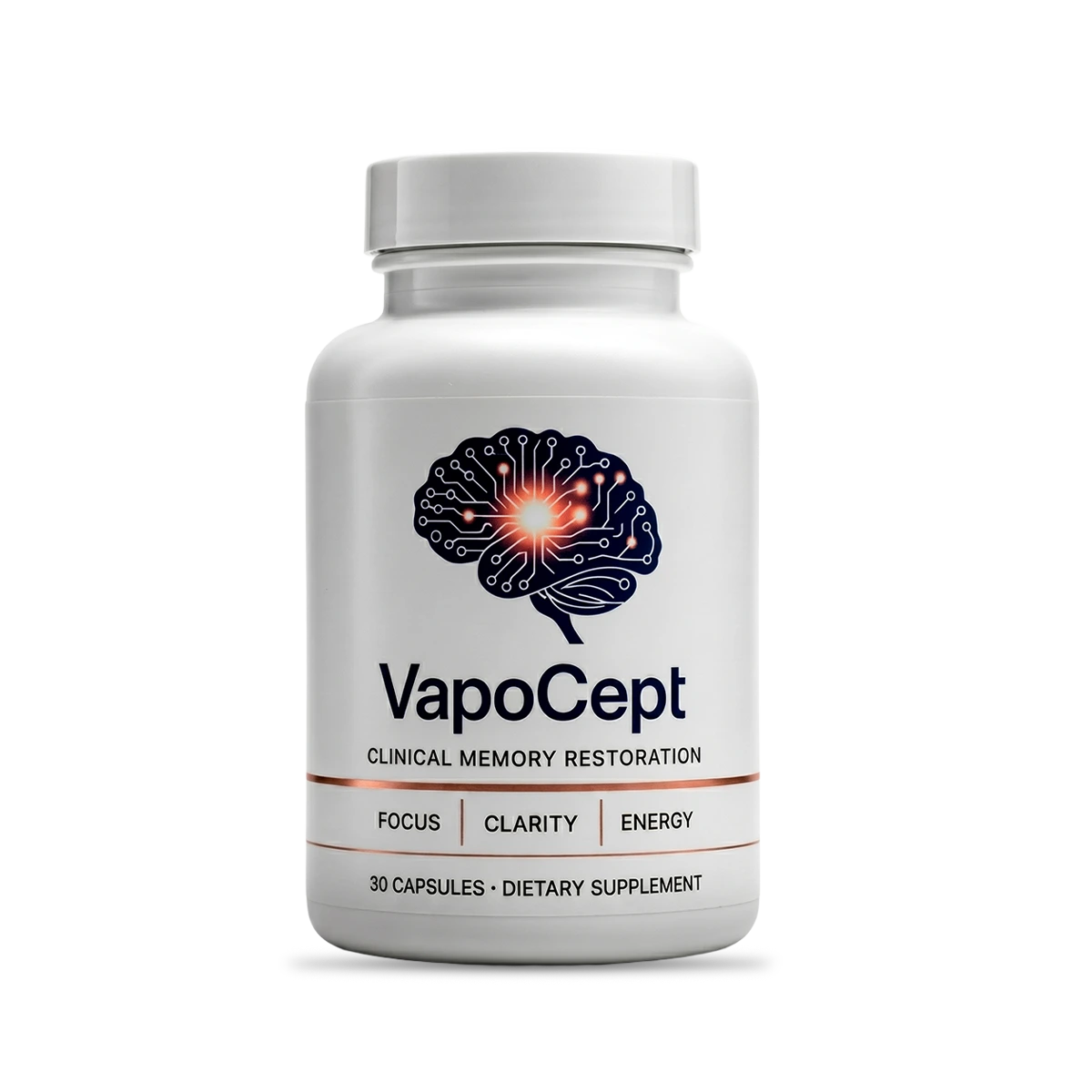
Pick up almost any brain supplement and you will find a line like "Proprietary Cognitive Blend — 850 mg" followed by a list of impressive-sounding ingredients and no individual amounts. This page is about what that line conceals and why VapoCept® does not use one.
What a Proprietary Blend Actually Hides
A blend discloses the total weight of the mixture and the ingredients inside it, in descending order by quantity. What it does not disclose is how much of each.
That single omission does a lot of work. A blend containing 849 mg of an inexpensive filler and 1 mg spread across six headline botanicals is labelled identically to one that is generously dosed. Both read as "850 mg." You cannot tell them apart, and that is not an accident of formatting.
Why the Practice Persists
In fairness, there is a legitimate argument: a manufacturer who has developed a particular ratio may not want competitors copying it exactly. That is a real commercial concern.
It is also true that the practice protects under-dosing far more often than it protects innovation. A brand confident in its amounts has an obvious incentive to print them. When a number is missing, the likeliest explanation is usually the simplest one.
How to Read a Supplement Label in Ninety Seconds
- Find the Supplement Facts panel. Not the marketing copy on the front — the regulated panel on the back.
- Look for the word "blend." If amounts are grouped under a single total, you cannot verify any individual dose.
- Check serving size first. A panel showing impressive numbers "per 3 capsules" is a different product from one showing them per capsule.
- Read the Other Ingredients line. This is where the capsule material lives. It is how you find out whether a product is vegetarian.
- Compare against a trial dose. Take one ingredient, find what the research used, and see whether the label is in the same range.
Those five checks will tell you more about a product than any amount of front-label language, and they work on any brand in the aisle.
How VapoCept® Is Labelled
Six actives, each named individually: Ginkgo Biloba Extract, Turmeric Extract, Marigold Extract, Green Tea Extract, Bamboo Extract and D-Glucosamine Sulfate Potassium Chloride. Three other ingredients, also named: a bovine gelatin capsule, magnesium stearate and microcrystalline cellulose. The individual milligram amounts are printed on the Supplement Facts panel of the bottle.
We will apply our own rule here rather than exempt ourselves from it: check the panel on the bottle you receive, and compare it against the trial doses listed on our ingredient science page. That is the test we would want you to run on anyone.
Two Things We Could Have Left Out
A transparency claim is only worth something if it survives the inconvenient parts, so here are the two we would quietly have omitted if the point were selling rather than informing.
The capsule is bovine gelatin. Animal-derived, which rules the product out for vegetarian, vegan, halal and kosher requirements. Many sites leave this to the back of the bottle.
Two of the six actives are not memory ingredients. Bamboo Extract and D-Glucosamine are nutritional foundation. A six-ingredient list naturally implies six ingredients pulling in the same direction, and in this case four are and two are not.
Who This Suits
- People who read the back of the bottle before the front
- Anyone who has tried a blend-based product and had no way to judge what was in it
- Adults comfortable with an eight-to-twelve week timeline, which is what the underlying research ran on
- Anyone who would rather be told about the gelatin capsule now than discover it at delivery
On "Best Of" Lists, and How to Read Them
Search for the best brain health supplement, the best memory supplement or the best brain supplement and you will find hundreds of ranked lists. Very few of them are what they appear to be, and knowing how they are assembled is more useful than reading another one.
Most pages ranking the best natural brain supplement or the best cognitive support supplement are affiliate pages, placing whichever product pays the most at number one. That applies equally to lists of top brain health supplements and top memory supplements, and to roundups of the best memory supplements 2026 that appear to have been refreshed only in the title. It is not automatically dishonest — but a ranking with a commercial interest in its own first place is not a ranking.
The same caution applies to a brain supplement comparison or memory supplement comparison built from marketing copy rather than from labels, and to pages of brain supplement reviews or memory supplement reviews where every entry scores above four stars.
A more useful approach, whether you are after the best supplement for mental clarity, the best supplement for focus and concentration, the best supplement for healthy brain aging, or natural memory supplements for seniors, is to stop looking for a verdict and run the five label checks above on the two or three products you are actually considering. A product that discloses its doses lets you compare it against published research. A product that does not has made the comparison impossible, and no ranking can repair that.
We would rather you did that here than take our word for anything.