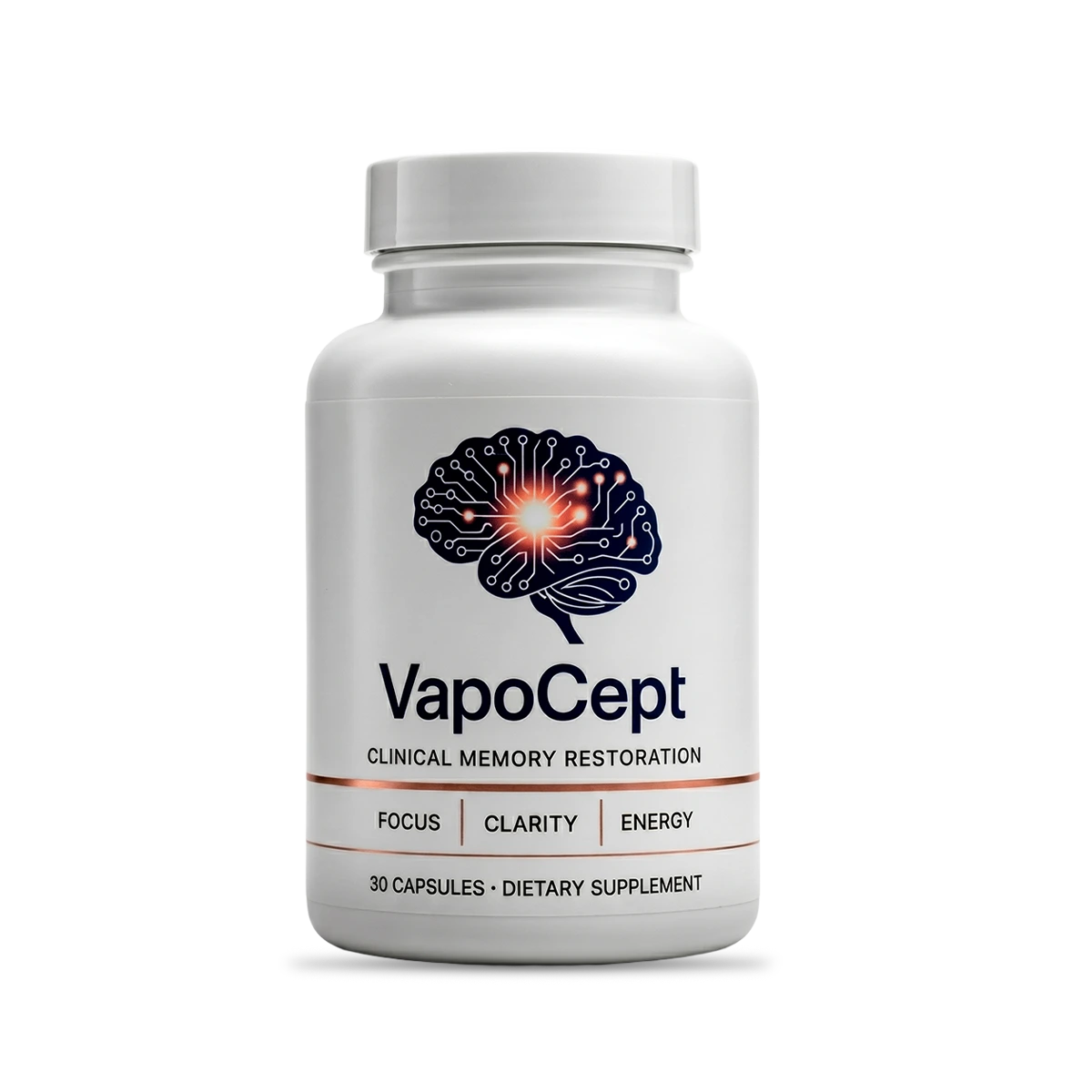
"Clinically studied ingredients" is one of the emptiest phrases in this category. It can mean a landmark eighteen-month trial or a cell-culture study from 1994. This page states, for each ingredient with published human research, the dose used, how long the trial ran, who took part and what was measured — so the phrase has to earn its keep.
Ginkgo Biloba — Free Recall, 6 Weeks
Trial: randomised, placebo-controlled, published in Phytomedicine, 2011.
Participants: 188 healthy volunteers aged 45 to 56.
Dose and duration: 240 mg standardised extract, once daily, six weeks.
Measured outcome: significant improvement in quantity of free recall for appointments — immediate recall p=0.038, delayed recall p=0.008. No advantage appeared on recognition testing for a driving-route task.
That last sentence is in the paper and belongs here too. The benefit showed up on unprompted retrieval and did not show up on recognition. A result with edges is more useful than one without.
Lutein and Zeaxanthin from Marigold — Attention, 12 Months
Trial: randomised, double-masked, placebo-controlled, published in Frontiers in Aging Neuroscience, 2017.
Participants: 51 analysable community-dwelling older adults, mean age 73.7.
Dose and duration: 12 mg combined lutein and zeaxanthin (10 mg lutein, 2 mg zeaxanthin) daily, twelve months.
Measured outcome: statistically significant increases in macular pigment optical density (p<0.03) and improvements in complex attention (p<0.02) and cognitive flexibility (p<0.04). The authors concluded that supplementation "improved cognitive function in community-dwelling, older men and women."
Curcumin from Turmeric — Memory and Attention, 18 Months
Trial: double-blind, placebo-controlled, run at UCLA and published in the American Journal of Geriatric Psychiatry, 2018.
Participants: 40 non-demented adults aged 51 to 84.
Dose and duration: 90 mg of a bioavailable curcumin twice daily, eighteen months.
Measured outcome: the authors concluded that daily oral curcumin "may lead to improved memory and attention in nondemented adults," with PET imaging suggesting the symptom benefits tracked alongside changes in brain regions involved in mood and memory.
Eighteen months is an unusually long run for a supplement trial, and the sample was small at 40 people. Both facts are worth holding at once.
L-Theanine from Green Tea — Attention and Reaction Time
Trial: randomised, placebo-controlled, double-blind crossover, published in Biological Psychology, 2008.
Tested: L-theanine and caffeine, separately and in combination — the pairing that occurs naturally in green tea.
Measured outcome: the combination produced faster simple reaction time, faster numeric working-memory reaction time and improved sentence-verification accuracy, with reduced ratings of tiredness. L-theanine alone performed less well on some measures, which is part of why the natural pairing is the interesting one.
Bamboo Extract and D-Glucosamine — No Comparable Research
These two have no section above because we found no comparable human cognitive trials for either, and inventing a paragraph of mechanism to fill the gap would be exactly the behaviour this page exists to avoid.
Bamboo Extract is a rich plant source of silica, a trace mineral with an established role in connective tissue. D-Glucosamine Sulfate Potassium Chloride is a naturally occurring amino sugar best known in joint nutrition. Both are reasonable inclusions in a daily formula. Neither is a memory ingredient, and we would rather say so than let a six-item list imply six equally evidenced ingredients.
How to Read Any Supplement's Research Page
- Check the dose matches. A trial using 240 mg tells you little about a product containing 20 mg.
- Check the population matches. Results in people with a diagnosis do not transfer automatically to healthy adults, or the other way round.
- Check the duration. A six-week benefit is not evidence of a three-day benefit.
- Check whether the citation is human. Cell-culture and rodent findings are a starting point, not an outcome.
- Check whether the finished product was tested. Usually it was not. Pages that blur this are telling you something about themselves.
Apply all five to this page as readily as to anyone else's. That is the point of listing the doses and durations in the first place.