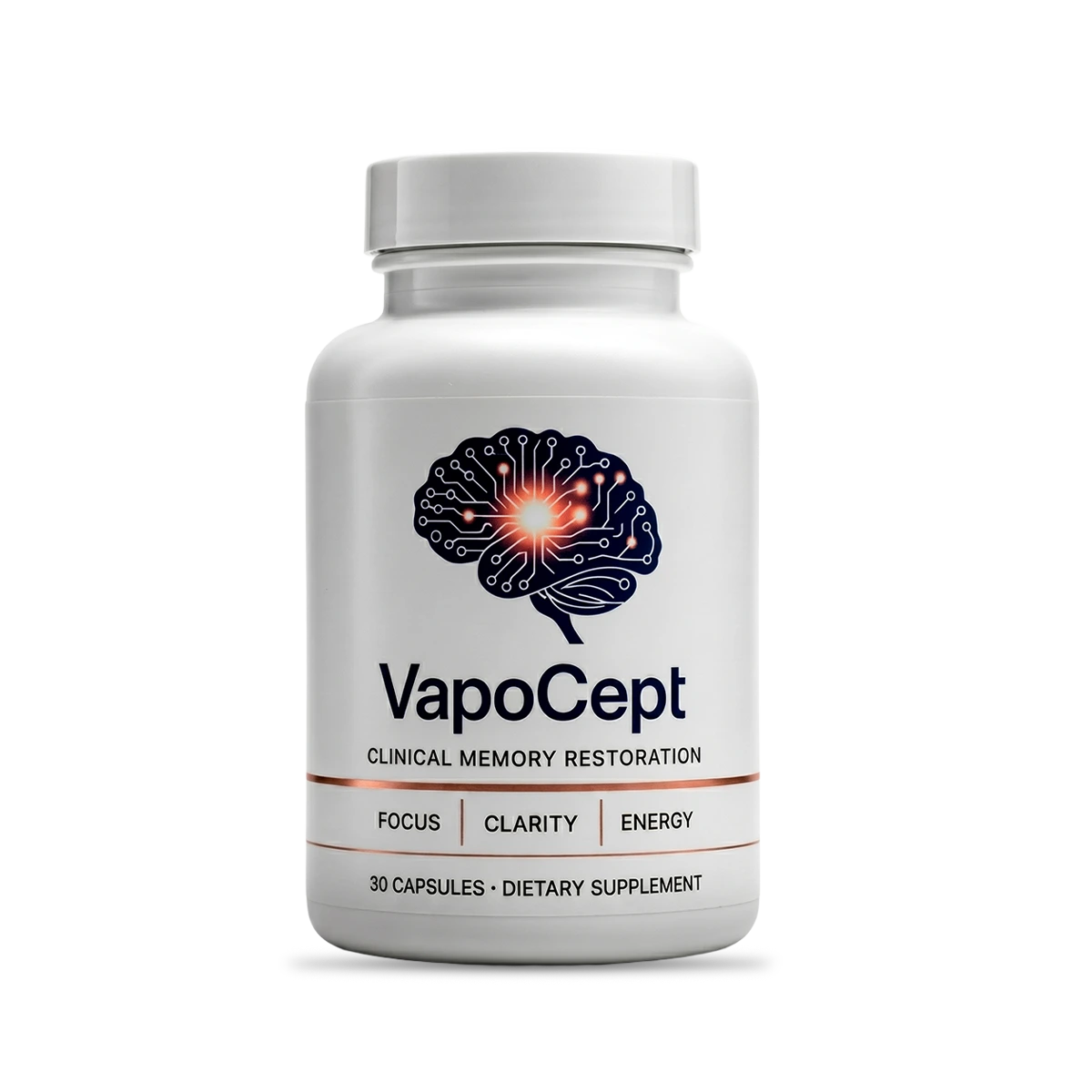
Three of the six ingredients in VapoCept® are there primarily for antioxidant support for brain health: Turmeric Extract, Green Tea Extract and Marigold Extract. This page explains what that actually means, because "antioxidant" is a word that has been worn smooth by overuse.
What Antioxidant Support Actually Describes
Your cells generate reactive oxygen species as an ordinary byproduct of producing energy. That is not a malfunction; it is metabolism working. The body has its own defence systems to keep the balance, and dietary antioxidants contribute to that balance from the outside.
Brain tissue has a few features that make this relevant: it consumes a disproportionate share of the body's oxygen, it is rich in the kind of fats that oxidise readily, and its cells are not replaced the way many others are. That is the honest version of why antioxidant brain support is discussed at all — not because antioxidants are magic, but because the tissue has a high metabolic load.
Turmeric Extract and Curcumin
Curcumin is the pigment that makes turmeric yellow and the compound responsible for most of its studied activity. It is among the more heavily researched plant compounds in nutrition, with antioxidant behaviour characterised across a large literature.
What lifts it above the general category here is one unusually long human trial: eighteen months, published in the American Journal of Geriatric Psychiatry in 2018, in 40 non-demented adults aged 51 to 84 taking 90 mg of a bioavailable curcumin twice daily. The authors concluded it "may lead to improved memory and attention in nondemented adults."
Curcumin's well-known weakness is absorption — on its own it is poorly taken up from the gut. This is why the extract form matters and why taking the capsule with a meal containing some fat is a practical, free improvement.
Green Tea Extract, EGCG and L-Theanine
Green tea extract brings two things to a formula. The first is EGCG, a catechin polyphenol and one of the better-characterised dietary antioxidants available. The second is L-theanine, an amino acid largely unique to tea, studied for calm alertness rather than antioxidant activity.
A 2008 crossover study in Biological Psychology tested L-theanine and caffeine separately and together. The combination — the pairing that occurs naturally in tea — produced faster simple reaction time, faster numeric working-memory reaction time and better sentence-verification accuracy, with less self-reported tiredness.
Which brings the caveat: green tea extract naturally contains caffeine unless decaffeinated. It is a small amount, well below a cup of coffee. If you are highly caffeine-sensitive, take the capsule earlier in the day. You deserve to know it is there.
Marigold Extract, Lutein and Zeaxanthin
Marigold flowers are the commercial source of lutein and zeaxanthin. Most people know them as eye nutrients, and that reputation is earned — they concentrate in the macula and give it its pigment. Less widely known is that both also accumulate in brain tissue, which is why lutein brain health research exists at all.
The twelve-month trial in Frontiers in Aging Neuroscience gave older adults 12 mg of combined lutein and zeaxanthin daily and measured significant improvement in complex attention and cognitive flexibility, alongside the expected rise in macular pigment. It is the cleanest piece of lutein cognitive support evidence in the formula.
Why Three Rather Than One
Different antioxidant compounds concentrate in different tissues and operate on different chemistry. Curcumin, EGCG and the carotenoids are not interchangeable, and combining them is a broader bet than concentrating on one.
The trade-off, stated plainly: no trial has tested these three together in this formula. Each result above comes from a study of that ingredient alone. Breadth is a reasonable design choice, not an evidenced one.
Food First, Then the Capsule
None of this displaces diet. Leafy greens supply lutein, tea supplies EGCG and theanine, and turmeric is a kitchen staple across much of the world. A supplement is a consistency tool for days when the diet does not deliver — a floor, not a replacement. Anyone selling you the reverse is selling.
Looking Up These Ingredients on Their Own
Each of these three gets searched far more often as a standalone ingredient than as part of any formula, so here is where they sit if you arrived that way.
Turmeric and Curcumin
Interest in a turmeric brain health supplement has grown quickly, and the research base is real. Most people searching for turmeric for brain health, turmeric cognitive support or turmeric for healthy aging are looking at the same eighteen-month trial described above. The compound doing the work is curcumin, so a curcumin brain health supplement and a turmeric memory supplement are usually describing the same thing by different names, and curcumin cognitive support is the more precise phrase of the two. Separately from cognition, turmeric antioxidant support is among the better-characterised areas in dietary antioxidants for brain health generally.
Marigold, Lutein and Zeaxanthin
A marigold extract supplement is, in practice, a lutein supplement — marigold is simply the commercial source. So marigold extract brain health, marigold lutein supplement and lutein brain health supplement all point at the same carotenoids. The twelve-month trial above is the reason lutein and healthy brain aging is now discussed at all, having previously been an eye-health subject almost exclusively. Lutein antioxidant support remains the broader claim, and a lutein supplement for seniors is the form most of the research has been conducted in.
Green Tea, EGCG and Theanine
A green tea extract supplement contributes two quite different things. For anyone reading about green tea extract brain health or green tea extract cognitive support, the antioxidant half is EGCG — which is why an EGCG brain health supplement and EGCG antioxidant support describe the same catechin. The alertness half is L-theanine, which is what people mean by green tea extract mental alertness, and it is the pairing rather than either alone that the 2008 study found most interesting. Green tea antioxidants for brain health is the umbrella phrase covering both.